
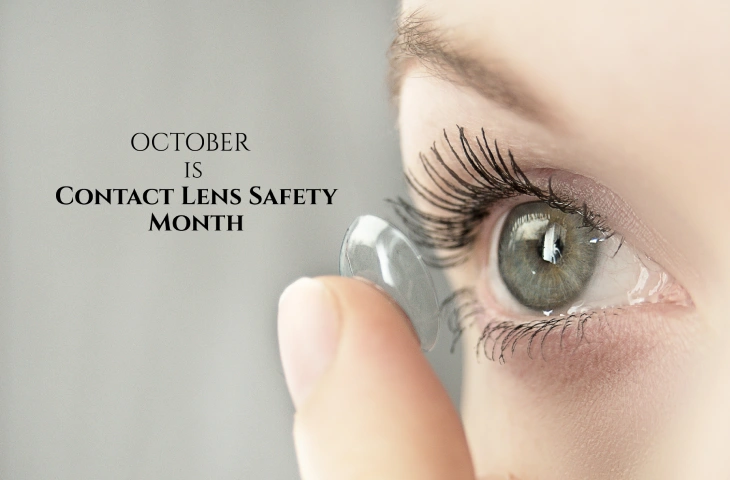
October is Contact Lens Safety Month, and I think it is a wonderful time to talk with my patients about something I see every day in our practice: contact lenses can offer incredible freedom and flexibility, but they need to be worn and cared for responsibly.
At Overlake Family Vision, I fit contact lenses for patients of all ages and lifestyles. That includes children who want the freedom to participate in sports without glasses, adults looking for comfortable vision correction, and patients who are discovering that today’s contact lens technology can help with both distance and near vision.
Contact lenses have come a long way. There are now options for astigmatism, presbyopia, sports, active lifestyles, and children and teens. But no matter which type of contact lens you wear, healthy eyes and safe contact lens habits always come first.
What Is Contact Lens Safety Month?
Contact Lens Safety Month is observed each October by Prevent Blindness to educate the public about proper contact lens use and care. The goal is simple: help contact lens wearers understand how to use their lenses safely and protect their eye health.
I always remind my patients that contact lenses are medical devices. Although they may become such a normal part of your routine that you barely notice them, contact lenses sit directly on the surface of your eyes.
That makes proper fitting, hygiene, replacement, and follow-up care especially important.
8 Contact Lens Safety Tips I Want Every Patient to Know
Here are some of the most important habits I recommend to my contact lens patients:
- Wash and dry your hands before handling your contacts.
- Follow your prescribed wearing and replacement schedule.
- Clean and store reusable lenses exactly as directed.
- Never expose contact lenses to water. Remove them before swimming, showering, bathing, or using a hot tub. Water exposure can increase the risk of serious eye infections.
- Never share your contact lenses with someone else.
- Replace contact lens solution and cases as recommended. Never reuse old solution or simply “top off” the solution in your case.
- Do not wear expired, damaged, or uncomfortable lenses.
- Pay attention to changes in your eyes. Redness, persistent pain, discharge, watering, irritation, or changes in vision should not be ignored. Remove your lenses and contact your eye care professional promptly.
If something doesn’t feel right with your eyes, don’t try to “wait it out.” Your vision is too important to ignore symptoms.
Can You See Clearly Up Close Without Reading Glasses?
This is a question I hear frequently from adults as they begin experiencing presbyopia, the age-related change that makes it harder to focus on things up close.
And the answer may surprise you:
Reading glasses aren’t necessarily your only option.
Multifocal Contact Lenses
Advances in contact lens technology have given us more choices than ever. Depending on your prescription, eye health, lifestyle, and visual needs, multifocal contact lenses may help provide clear vision at both distance and near.
Think about how often you switch between distances during an ordinary day. You might read a menu at lunch, look at your phone, work on a computer, drive home, and then read a book in the evening.
For some patients, multifocal contact lenses can make these everyday transitions much more convenient.
If you’ve assumed that developing presbyopia means you will automatically need to carry reading glasses everywhere, it may be worth asking your eye doctor about today’s contact lens options.
Of course, multifocal contact lenses aren’t right for everyone. At Overlake Family Vision, I evaluate your prescription, eye health, lifestyle, and visual priorities to determine which options may be appropriate for you.
Contact Lenses for Astigmatism
Astigmatism is another reason some patients assume they aren’t good candidates for contact lenses.
Fortunately, contact lenses for astigmatism have come a long way.
Toric contact lenses are specifically designed to correct astigmatism, and many patients can achieve clear, comfortable vision with them. Prevent Blindness specifically identifies toric lenses as an option for people with astigmatism.
If you’ve been told in the past that contact lenses weren’t an option because you have astigmatism, it may be worth having another conversation with your eye doctor.
Contact lens technology continues to evolve, and there may be options available today that weren’t available when you last tried contacts.
Contact Lenses for Sports and Active Lifestyles
Whether you’re an adult who enjoys staying active or a child heading onto the field, court, or gym, contact lenses can be an excellent option for sports and other activities.
I hear from many patients who love the freedom of not having to worry about glasses slipping down their nose, fogging up, or getting in the way during play.
Contact lenses can also provide a more natural field of vision, which many athletes appreciate when they are moving quickly or need to be aware of what’s happening around them.
Are Daily Disposable Contact Lenses Good for Sports?
For many active patients, daily disposable contact lenses can be a particularly convenient option.
With daily disposables, you start each day with a fresh pair of lenses and discard them after use. There’s no need to clean and store the lenses overnight.
That can be especially appealing for someone who primarily wears contacts for sports, exercise, travel, or other activities.
Your eye doctor can determine whether daily disposable lenses are appropriate for your eyes and prescription.
And remember: contact lenses do not replace protective eyewear. If your sport or activity calls for protective eye equipment, wear the appropriate protection in addition to your contact lenses.
Is My Child Ready for Contact Lenses?
This is one of the most common questions I hear from parents:
“Is my child ready for contact lenses?”
There isn’t one magic age when every child becomes ready for contacts.
In my experience, motivation and responsibility can be more important than age alone.
Many children and teenagers can successfully wear contact lenses when they are motivated to wear them and ready to take responsibility for proper hygiene and lens care.
At Overlake Family Vision, I especially enjoy helping young patients learn how to handle their lenses. We take the time to teach children how to safely and confidently insert, remove, clean, and care for their contact lenses.
For a child who plays sports, struggles with glasses during activities, or simply wants the freedom of contact lenses, they can be a wonderful option.
And parents don’t need to expect their child to master everything immediately. Learning to handle contact lenses is a process, and we work with each young patient at their own pace.
Halloween Contact Lenses: Don’t Let a Costume Put Your Vision at Risk
October is also Halloween season, which means decorative and colored contact lenses become especially popular.
This is one area where I want patients and parents to be particularly careful.
Decorative contact lenses are not simply a costume accessory. They are medical devices and require a prescription and proper fitting.
An improperly fitted or unauthorized contact lens can cause corneal scratches, infection, decreased vision, and potentially permanent vision loss.
Never buy Halloween contacts from:
- Halloween or costume stores
- Beauty supply stores
- Flea markets
- Street vendors
- Unverified online sellers
- Any seller that does not require a prescription
If you’re considering colored or Halloween contact lenses, please talk with your eye doctor first.
A fun costume isn’t worth putting your vision at risk.
How Do I Know Which Contact Lenses Are Right for Me?
One of the things I love about modern contact lens technology is that there isn’t a single “contact lens” solution anymore.
Depending on your needs, we may consider:
- Daily disposable contact lenses for convenience and active lifestyles
- Multifocal contact lenses for adults experiencing presbyopia
- Toric contact lenses for astigmatism
- Contact lenses for children and teenagers who are ready for the responsibility
- Other specialized lenses based on your prescription and eye health
The goal isn’t simply to put a contact lens on your eye.
The goal is to find a lens that works well for your eyes and fits your life.
A Message From Your Eye Doctor
Contact Lens Safety Month is a reminder to take care of the lenses you wear—but I also see it as an opportunity to ask whether your current vision correction is still the best solution for you.
Your vision needs can change, and your contact lenses can change with them.
At Overlake Family Vision, I want to understand how you use your eyes every day—not just what your prescription says. Whether you’re looking for contacts for sports, exploring multifocal lenses, managing astigmatism, or wondering whether your child is ready for contacts, I’m happy to help you explore your options.
This October, let’s make Contact Lens Safety Month a reminder not only to wear your contacts safely, but also to make sure you’re getting the clearest, healthiest, and most comfortable vision possible.
Your eyes are worth taking care of—and your contact lenses should work for your lifestyle, too.
Mary Baker, O.D.
Overlake Family Vision